The smart glasses market is experiencing explosive growth with 2024 shipments surging 210% year-over-year. Meta Ray-Ban dominates with over 60% market share, but faces intensifying competition from Xiaomi, HTC, and other brands. For investors, this represents the most significant computing platform shift since smartphones. This comprehensive analysis provides product breakdowns, investment strategies, and buying guides for both investors and consumers.
From Failure to Success: A Decade of Transformation
Google Glass: The Cautionary Tale
Remember Google Glass from 2013? Heralded as revolutionary technology, it ultimately failed spectacularly. The $1,500 “groundbreaking” product led users to be mocked as “Glassholes” and banned from many establishments.
Google Glass’s three fatal flaws:
- Immature technology: Battery life under one hour with frequent overheating
- Privacy concerns: 72% of Americans worried about unauthorized recording
- Unclear value proposition: Consumers couldn’t understand why they needed it daily
Google co-founder Sergey Brin admitted in 2025: “We made mistakes when the technology still had significant gaps, and we knew nothing about supply chain and cost control.”
Meta Ray-Ban: The Turnaround Story
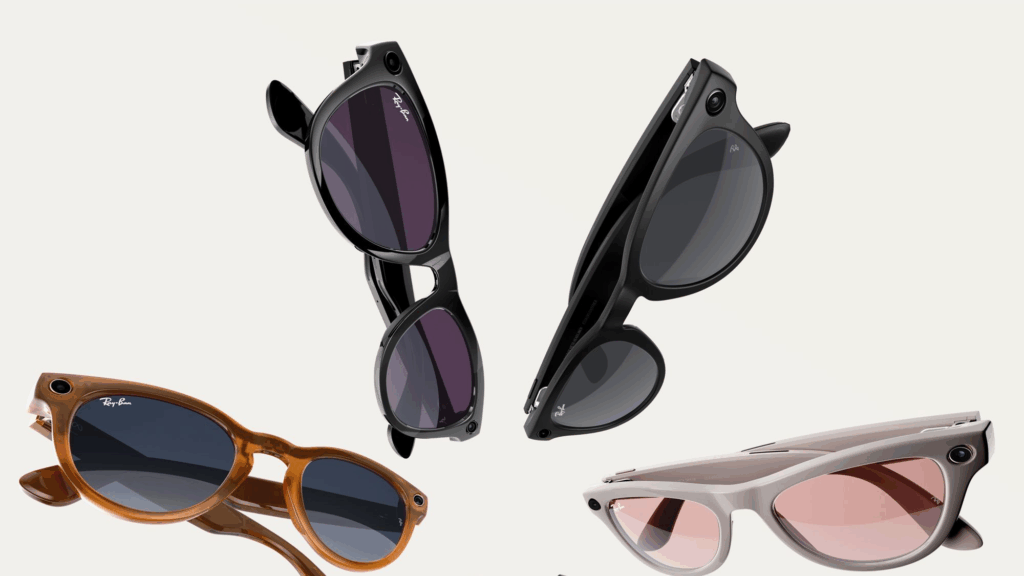
A decade later, the situation has completely reversed. Ray-Ban Meta smart glasses revenue tripled year-over-year, with total sales reaching 2 million units, making it the most successful smart glasses product in history.
Meta’s success factors:
- Fashion-forward design: Partnership with iconic Ray-Ban brand
- Practical functionality: Focus on camera, audio, and AI assistant
- Reasonable pricing: Around $300, five times cheaper than Google Glass
- Privacy protection: Clear privacy indicator lights
In EU regions, 60% of Ray-Ban stores list Meta smart glasses as bestsellers, demonstrating fundamental market acceptance.

Current Market Explosion: The Numbers Don’t Lie
210% Growth Phenomenon
Global smart glasses shipments surged 210% YoY in 2024, surpassing the 2-million-unit milestone for the first time. The supply chain expects 2025 to be a “battle of hundreds of smart glasses” with 60% YoY growth in 2025 and sustained CAGR of over 60% through 2029.
This growth trajectory mirrors smartphone adoption in its early stages. Analysts compare smart glasses’ explosive path to the original iPhone era, with us currently at the revolution’s starting point.
Market Size Projections
Multiple research institutions point toward the same direction:
- Grand View Research: $1.93 billion in 2024 growing at 27.3% CAGR to 2030
- Markets and Markets: $878.8 million in 2024 reaching $4,129.3 million by 2030 at 29.4% CAGR
- SkyQuest Technology: $6.24 billion in 2023 to $15.09 billion by 2032
While specific numbers vary, all forecasts show explosive growth ahead.

Today’s Market Landscape: Who’s Competing and How?
AI Smart Glasses vs AR Display Glasses
AI Smart Glasses (Mainstream Market)
- Core functions: Camera capture, audio playback, AI voice assistant
- Price range: $280 – $520
- Representatives: Ray-Ban Meta, Xiaomi AI Glasses, HTC VIVE Eagle
- Target users: Daily consumers, content creators, fashion enthusiasts
AR Display Glasses (Professional Market)
- Core functions: Virtual large screens, entertainment, office applications
- Price range: $300 – $800
- Representatives: Xreal One Pro, Viture Luma Pro, Rokid AR Lite
- Target users: Business professionals, gamers, frequent travelers
Deep Dive: Major Competitors
1. Meta Ray-Ban (Market Pioneer)
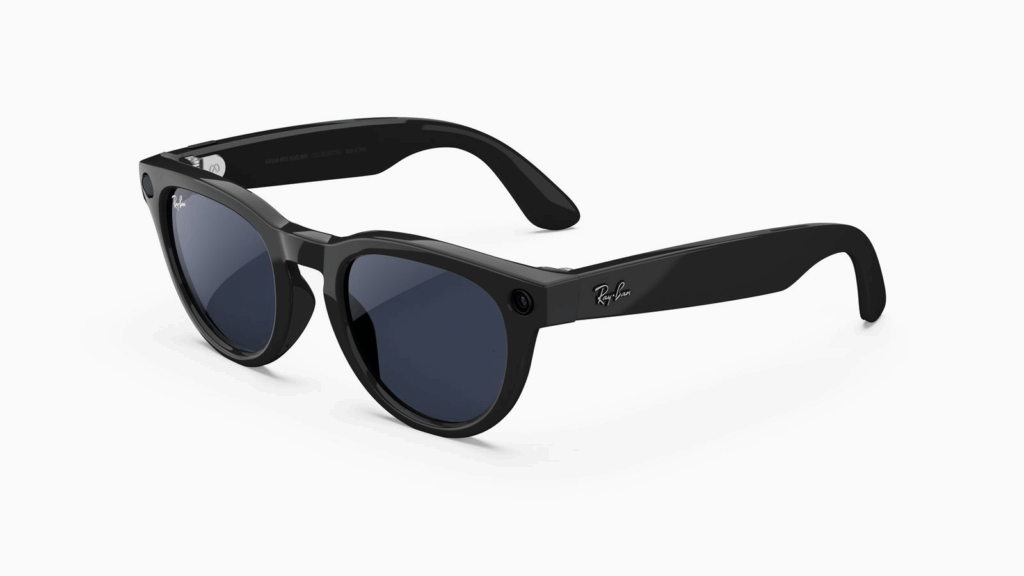
- Market position: 85% market share, 2024 sales exceeded 1 million units
- Core advantages: Fashion brand collaboration, complete ecosystem, continuous feature updates
- Specifications: 12MP camera, 4-5 hour battery, $299 starting price
- Success key: Focus on core functions, avoiding Google Glass’s complex AR display trap
2. Xiaomi AI Glasses (Value Killer)

- Differentiation: $280 lowest price, 8.6 hours longest battery life
- Localization advantages: Alipay payments, Asian face optimization, XiaoAI assistant
- Technical highlights: Electrochromic lenses (0.2-second color change), electronic image stabilization
- Market positioning: High value challenging Meta, targeting China and Asian markets
3. HTC VIVE Eagle (Privacy First)
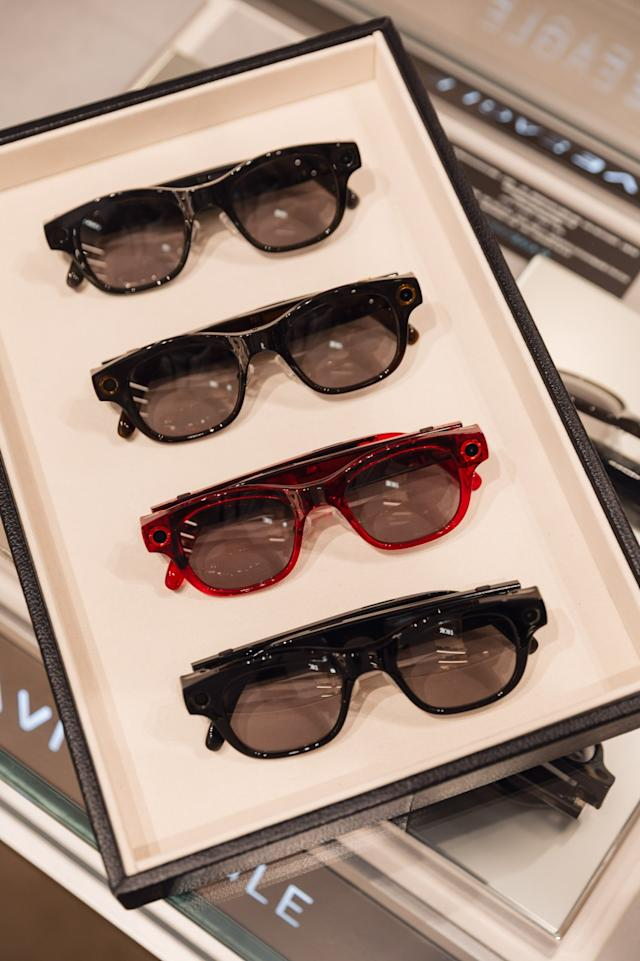
- Differentiation: Privacy-first design, 100% Taiwan manufacturing, multi-AI platform support
- Technical features: Local data processing, 256-bit AES encryption, ChatGPT and Gemini support
- Pricing: $520 premium market, targeting enterprises and privacy-conscious consumers
- Challenge: Currently Taiwan-only, limited international presence
4. Oakley Meta HSTN (Sports Specialist)
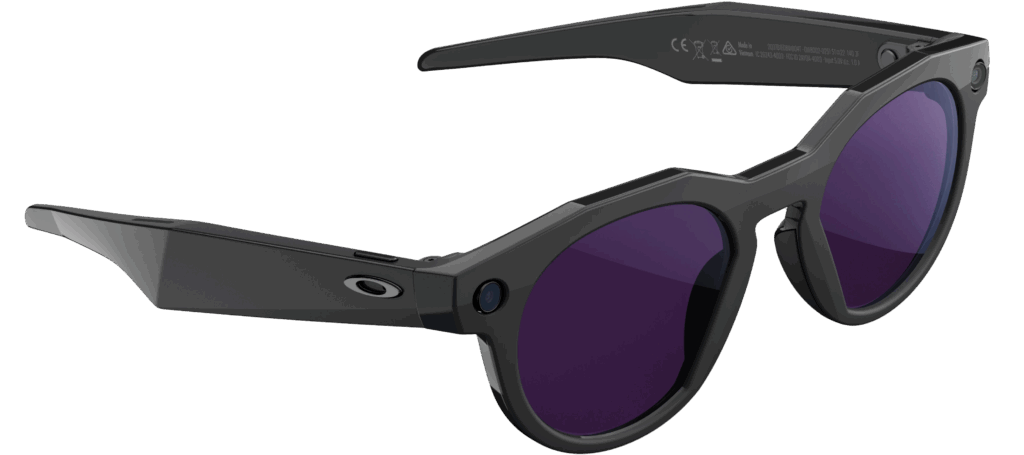
- Professional positioning: Athletes and outdoor enthusiasts
- Performance upgrades: 8-hour battery, 3K recording, PRIZM sports lenses
- Pricing strategy: $399-$499, more expensive than basic Ray-Ban but clearly differentiated
- Market opportunity: Professional needs in sports and outdoor markets

Why Now is the Right Time: Critical Technology Breakthroughs
AI Revolution: Smart Assistant Era
Sergey Brin explains why now is different: “In the AI world, these glasses can help you without continuously distracting attention, and this capability has significantly improved.”
Modern smart glasses AI functions include:
- Real-time language translation: Multi-language instant conversion
- Visual recognition: Object, building, even facial identification
- Navigation assistance: Walking directions and information overlay
- Productivity tools: Calendar reminders, notification management
5G and Connectivity: Seamless Experience Foundation
5G network proliferation provides crucial infrastructure for smart glasses:
- High-resolution video streaming becomes possible
- Real-time cloud AI processing eliminates latency
- Multi-person AR collaboration becomes reality
Battery Technology: From Weakness to Strength
Remember Google Glass’s sub-one-hour battery? Today’s smart glasses provide all-day usage:
- Meta Ray-Ban: About 4-5 hours
- Xiaomi AI Glasses: 8.6 hours
- Future technology: Silicon-carbon and graphene batteries will further extend battery life

Tech Giants’ Arms Race
Apple’s Ambition: 7 Head-Mounted Device Plan
Apple is developing at least seven head-mounted products, with Ray-Ban-style smart glasses projected to ship 3-5 million units in 2027. Apple plans to launch its Ray-Ban Meta competitor by late 2026.
When Apple enters the market, with its massive iPhone user base, it could instantly change the competitive landscape. As analysts note: “Meta should enjoy their lead while they have it, because Apple fans are really hyped at the prospects of Apple AI Glasses as an iPhone accessory.”
Google’s Return: Android XR Platform
Google hasn’t abandoned smart glasses. The company is developing Android XR platform, partnering with brands like Warby Parker and integrating Gemini AI technology.
Samsung’s Strategic Alliance
Samsung reportedly plans to launch smart glasses with Google Gemini AI, expected in late 2025 or early 2026.
Chinese Brigade’s Collective Rise
By end of January 2025, over nine new AI smart glasses models debuted, predominantly from China-based companies, including:
- Baidu: Xiaodu AI glasses
- ByteDance: TikTok-related eyewear products
- Huawei: Multiple smart glasses products
- TCL: Consumer AR glasses

Investment Opportunities: Mining the Smart Glasses Value Chain
Platform Companies: Ecosystem Controllers
Meta (META)
- Market leader position secured
- Deep partnership with EssilorLuxottica
- Plans to expand annual capacity to 10 million units
Apple (AAPL)
- Potential market disruptor entering soon
- Strong ecosystem integration capability
- Natural advantage with iPhone user base
Supply Chain Hidden Champions
Optical Technology Leaders
- Companies providing high-end lenses for AR glasses, benefiting from Meta, Apple demand
- Advanced optical solutions with high technical barriers
Key Material Suppliers
- Transparent polyimide films for smart glasses supply chains
- Nano-level optical coating technology for premium lens manufacturers
Circuit Board & Connectivity
- Exclusive low-loss materials for specific brands in high-frequency signal transmission
- Competitive advantages in critical components with established international partnerships
Chips and Semiconductors: Computing Core
Qualcomm (QCOM)
- Snapdragon AR1 platform chosen by most products
- Leadership position in AR/VR chips

Investment Risks: Challenges Not to Ignore
Technology Risks: Expectation vs Reality Gap
Current smart glasses mainly focus on audio and camera functions. True AR display technology still needs years to mature. Investors must recognize:
- Display technology requires breakthroughs
- Battery technology needs further improvement
- Computing performance vs power consumption balance is ongoing challenge
Market Risks: Consumer Acceptance Uncertainty
While Meta Ray-Ban succeeded in North America, whether this success model applies globally remains questionable:
- Different cultural privacy sensitivities
- Price sensitivity varies by market
- Regulatory environments may limit certain functions
Competition Risks: Winner-Take-All Reality
When Apple enters the market, existing competitive landscape may be completely disrupted. Like smartphone market evolution, ultimately only a few companies may survive.

Future Outlook: Smart Glasses’ Ten-Year Vision
Technology Evolution Roadmap
2025-2026: Basic Function Maturity
- AI assistant capabilities perfected
- All-day battery life
- Standardized privacy protection
2027-2028: AR Display Breakthrough
- True AR overlay displays
- Gesture and eye tracking
- Spatial computing capabilities
2029-2030: Platform Ecosystem Maturity
- Rich third-party applications
- Seamless multi-device integration
- Personalized AI assistants
Social Impact Predictions
If smart glasses truly succeed, they may:
- Change human-computer interaction: From looking down at phones to natural conversation
- Redefine privacy concepts: Require new social norms
- Create new business models: AR advertising, virtual commerce
- Impact education and work: Immersive learning, remote collaboration

Product Selection Guide: What Investors and Consumers Need to Know
Daily Users: Ray-Ban Meta Remains Safest Choice
- High brand recognition, maintained resale value
- Complete ecosystem, continuous feature updates
- High social acceptance, fashionable appearance
Budget-Conscious: Xiaomi AI Glasses Offer Best Value
- Lowest price without compromising functionality
- Longest battery life
- Suited for Asian market usage habits
Enterprise Users: HTC VIVE Eagle Provides Best Privacy Protection
- Local data processing meets enterprise security requirements
- Multiple AI platform support avoids vendor lock-in
- Taiwan manufacturing, reliable quality
Sports Enthusiasts: Oakley Meta HSTN Built for You
- Waterproof design for outdoor use
- Long battery life handles extended activities
- Professional sports lenses for superior visual experience
Entertainment Focus: Xreal One Pro Delivers Cinema Experience
- 200-inch virtual screen for work and entertainment
- Multiple device connectivity support
- Perfect for business professionals and digital nomads
Bottom Line: The Investment Opportunity of a Decade
Smart glasses stand at a historic inflection point. Compared to Google Glass’s failure a decade ago, today’s technology maturity, market environment, and consumer acceptance have fundamentally changed.
Reasons to invest in smart glasses:
- Massive market size: Expected to maintain 60%+ CAGR through 2029
- Technology timing: Critical breakthroughs in AI, 5G, battery technology
- Platform shift opportunity: Potential next-generation primary computing platform
- Ecosystem effects: Successful products will drive entire industry chain
Smart glasses investment considerations:
- Technology risks persist: AR display, battery life need breakthroughs
- Fierce market competition: Ultimately may have few winners
- Consumer acceptance: Privacy and social acceptance remain challenges
- Regulatory uncertainty: Different market regulatory requirements may vary significantly
For investors, smart glasses represent a medium-to-long-term opportunity requiring patience and strategy. Success depends on choosing companies with core technology, strong ecosystems, and execution capability, while preparing for risk diversification and long-term investment.
As Meta CEO Mark Zuckerberg said: “2025 will be the year we understand AI glasses’ trajectory as a category.” For visionary investors, now may be the optimal time to enter this market.
This analysis is based on comprehensive research from industry reports, company earnings, and market intelligence. Investment decisions should consider individual risk tolerance and seek professional financial advice.